KNOWLEDGE BASE
Comprehensive resource on cognitive biases, AI architectures, and decision-making frameworks for sovereign intelligence systems.
COGNITIVE BIAS CODEX (2016)
A comprehensive visual map of 188 cognitive biases organized by the four fundamental problems they attempt to solve. Understanding these biases is critical for building sovereign decision-making systems.
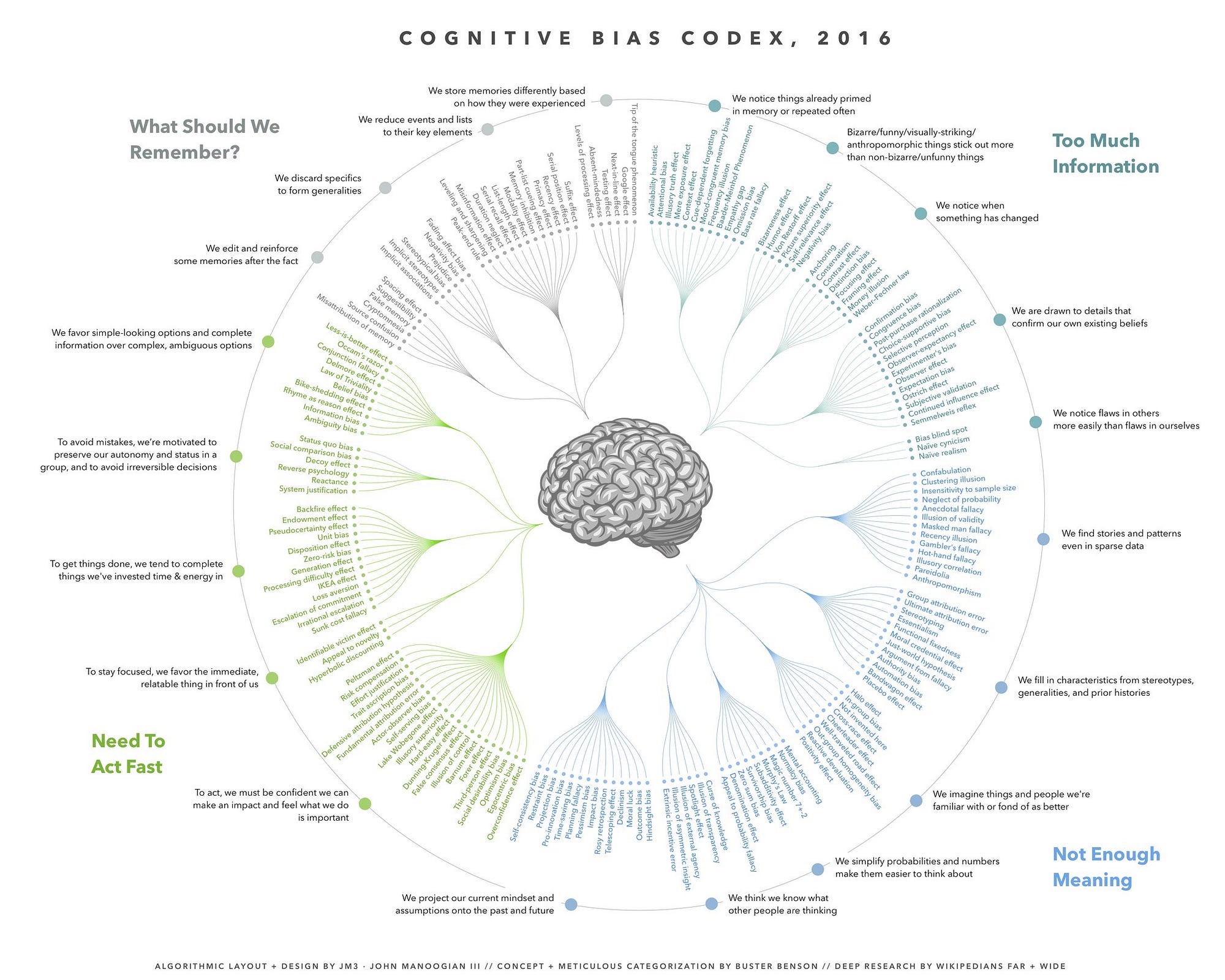
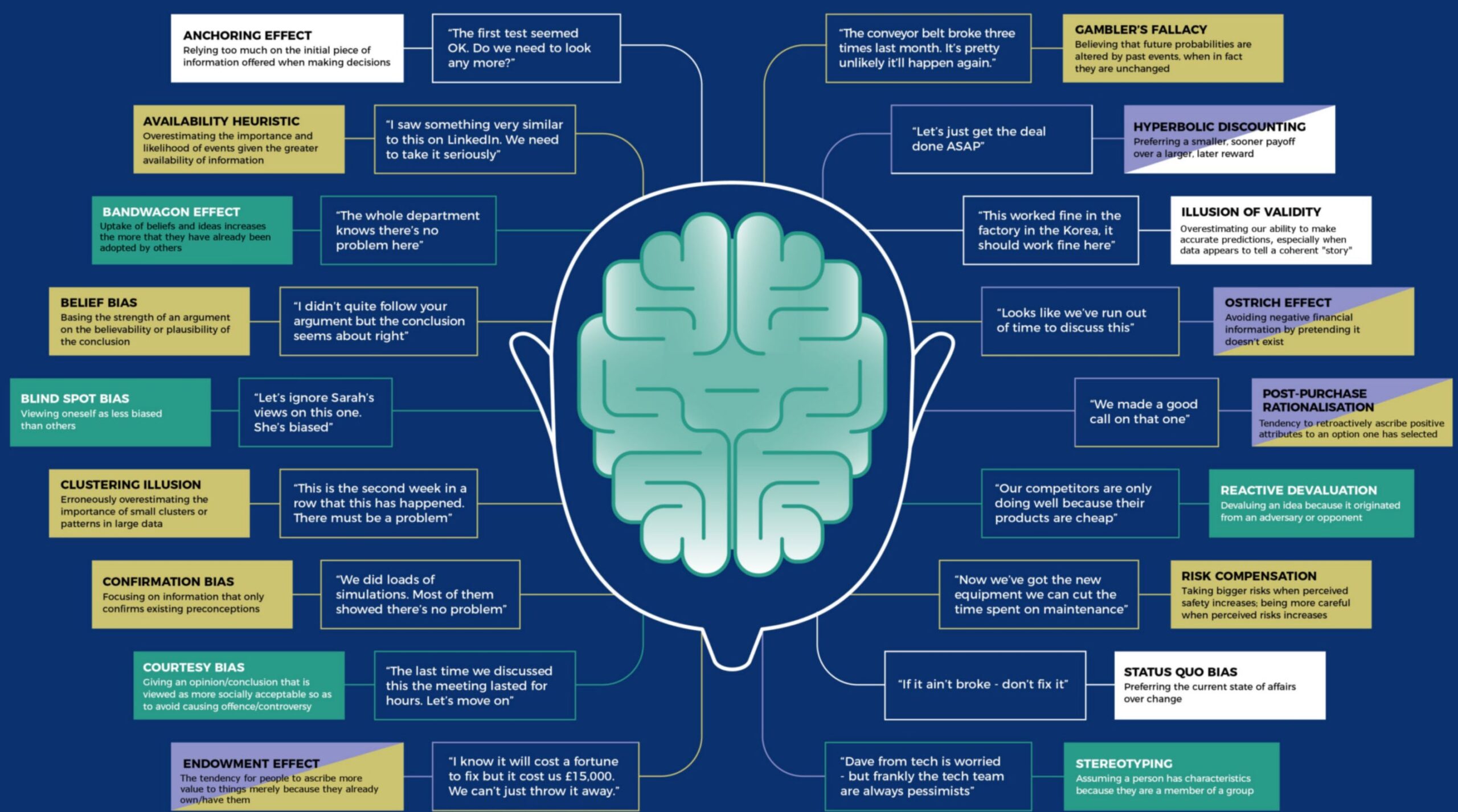
Too Much Information
We notice things already primed in memory or repeated often
Not Enough Meaning
We fill in characteristics from stereotypes and generalities
Need To Act Fast
We favor simple options and complete things we've invested in
What Should We Remember
We edit and reinforce some memories after the fact
Too Much Information
10Availability Heuristic
Overestimating the importance of information that's readily available
Attentional Bias
Tendency to pay attention to some things while ignoring others
Illusory Truth Effect
Believing information is true because we've heard it repeatedly
Mere Exposure Effect
Preference for things simply because we're familiar with them
Context Effect
Environmental factors influence perception and memory
Cue-Dependent Forgetting
Inability to recall information without specific cues
Mood-Congruent Memory Bias
Recalling information consistent with current mood
Frequency Illusion
Noticing something everywhere after becoming aware of it
Baader-Meinhof Phenomenon
Seeing something once then noticing it everywhere
Empathy Gap
Underestimating how emotions affect behavior
Not Enough Meaning
10Confabulation
Creating false memories without intent to deceive
Clustering Illusion
Seeing patterns in random data
Insensitivity to Sample Size
Ignoring sample size when judging probability
Neglect of Probability
Ignoring probability when making decisions under uncertainty
Anecdotal Fallacy
Using personal experience instead of data
Illusion of Validity
Overconfidence in judgment accuracy
Masked Man Fallacy
Substituting identical objects in logical arguments
Recency Illusion
Believing something is new when it's not
Gambler's Fallacy
Believing past events affect future probabilities
Hot-Hand Fallacy
Believing success will continue after a streak
Need To Act Fast
10Sunk Cost Fallacy
Continuing investment based on past costs
Irrational Escalation
Increasing commitment to failing decisions
Loss Aversion
Preferring to avoid losses over acquiring gains
IKEA Effect
Valuing things more when we create them
Processing Difficulty Effect
Judging difficulty by how hard it feels to process
Generation Effect
Better memory for self-generated information
Zero-Risk Bias
Preferring complete elimination of risk
Disposition Effect
Selling winners too early, holding losers too long
Unit Bias
Consuming one unit regardless of size
Pseudocertainty Effect
Making risk-averse choices for certain gains
What Should We Remember
10Misattribution of Memory
Recalling information but forgetting the source
Source Confusion
Confusing the source of a memory
Cryptomnesia
Mistaking imagination for real memory
False Memory
Remembering events that never occurred
Suggestibility
Incorporating misleading information into memory
Spacing Effect
Better retention with spaced repetition
Implicit Stereotypes
Unconscious attribution of traits to groups
Implicit Associations
Automatic mental connections between concepts
Stereotypical Bias
Expecting group members to have certain traits
Prejudice
Preconceived opinion not based on reason